13
Fri, Feb
75 New Articles

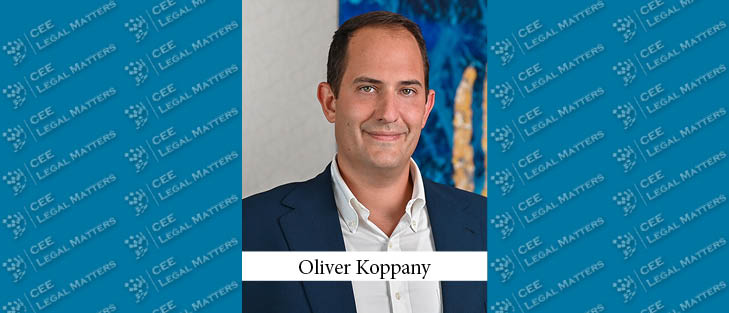
In The Corner Office, we ask Managing Partners at law firms across Central and Eastern Europe about their backgrounds, strategies, and responsibilities. This time around, we asked: Would you ever hire a non-lawyer as a CEO/Managing Partner for your firm? Why/why not?

According to investment plans announced this summer, the government is preparing to implement large-scale road and railway construction projects over the next ten years. These public infrastructure developments will significantly impact the country's transportation network, ultimately affecting the national economy. However, the developments have a rarely discussed but also important consequence: the expected increase in expropriation cases.

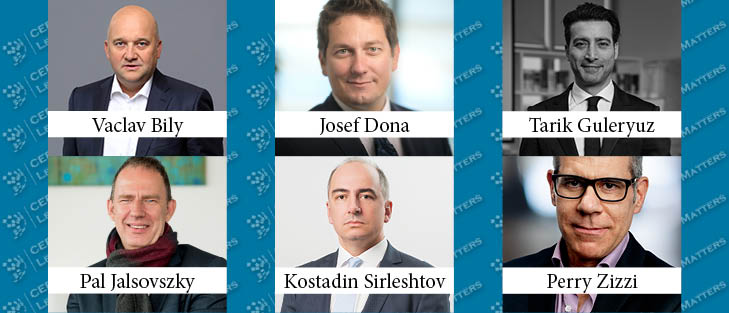
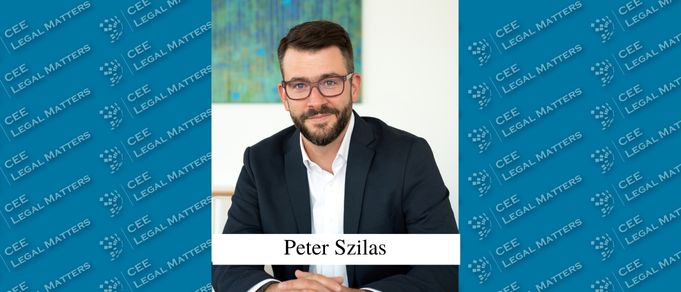
In The Corner Office, we ask Managing Partners at law firms across Central and Eastern Europe about their backgrounds, strategies, and responsibilities. This time around, we asked: If you were to hire a new receptionist tomorrow, what is the one most important trait you look for and why?

At the beginning of the summer, the regulations governing the land registry in Hungary were amended, introducing significant changes affecting owners of so-called garden plots in the outskirts ( in Hungarian: “zártkerti ingatlanok”), such as weekend houses, garden homes, and similar plots. The practical benefits, however, will largely depend on the location and on whether the local municipality allows their application.

In The Corner Office, we ask Managing Partners at law firms across Central and Eastern Europe about their backgrounds, strategies, and responsibilities. This time around, we asked: What is the ratio between business development activities and billable hours for Partners within your team, on average?

A new legislative proposal aims to introduce several exciting innovations in civil litigation. The objectives include speeding up court proceedings, increasing public oversight over litigation, modernizing legal education and academic research, enhancing the Supreme Court’s (Kúria) function of ensuring legal uniformity, and reducing the administrative burden on courts related to their obligation to provide reasoning. We’ve summarized the most intriguing innovations from the proposal below.


HR sci-fi is unfolding before our eyes: there is no doubt that HR technologies represent one of the fastest-evolving segments of digitalization and artificial intelligence. Today, it’s entirely common for candidates to be interviewed by AI chatbots, payroll processes to be assisted by AI-based software, and predictive analytics powered by AI to be used in workforce planning. While progress cannot be halted, it's essential to pay close attention to legal compliance requirements during this hyperspace-speed transformation—otherwise, poorly executed digitalization could lead to serious headaches.

According to Jalsovszky Partner Tamas Feher, white-collar crime and commercial litigation have been the key growth areas for the firm's Dispute Resolution Practice over the past year, driven by shifts in tax authority behavior, legislative changes, and a more cautious business climate.

In The Corner Office, we ask Managing Partners at law firms across Central and Eastern Europe about their backgrounds, strategies, and responsibilities. This time around, we asked: For 2025, what is the one sector or industry in the country that shows the most promise for growth, and why?

The new Real Estate Registration Act that came into effect in January restructured the system for registering properties purchased in installments or subject to conditions, and introduced the so-called buyer's right. However, since January, there has been considerable debate regarding whether the buyer's right can be registered on properties involved in bank financing (and therefore under alienation and encumbrance prohibition). A recently enacted amendment to the law, however, resolves this issue.

Employer of record (EoR) services are becoming increasingly popular for companies looking to expand rapidly internationally. This allows a company to enter a market and recruit workers in another country quickly, efficiently and at lower cost without setting up a subsidiary. As with any panacea, however, it is important to be careful.

Connecting a holiday in Tenerife with remote work? Sending an employee to China for three months? While ten years ago, these questions were considered unique, today, international mobility has become an everyday part of employment relationships.

Page 1 of 4

Jalsovszky

Jalsovszky is one of Budapest’s fastest-growing and most innovative law firms. The key to our success is a business-focused approach paired with logical thinking. Clients appreciate that we are never afraid to voice our opinion even in critical situations.

We regard ourselves as a boutique law firm. No matter how experienced our associates are, we cannot be fully conversant in every area of the law, even in the field of commercial law. But when it comes to what we specialise in, we consider ourselves to be among the best.

Whether with regard to our clients or our staff, it is a human-oriented thinking that defines us. It is important for us to build personal relationships with our clients. We believe a personal relationship does not get in the way of providing a high-quality professional service – on the contrary, it makes the co-operation even more effective. We aim, further, to provide our colleagues with a friendly and supportive environment in which they can find fulfilment and motivation.

Our firm’s market-leading role and the exceptional quality of our legal team is acknowledged year in, year out by numerous international rating agencies (including the publications Legal500, Chambers and Partners, IFLR and International Tax Review).

For further information, please visit jalsovszky.com